

Basement Mold Removal in Corona, CA
Older homes throughout Corona, particularly in South Corona and the historic core, often have crawl spaces where moisture from irrigation, plumbing leaks, and winter rainfall accumulates beneath the structure, creating an environment where mold can develop. Basement mold removal requires swift action to prevent the problem from spreading to living areas and affecting indoor air quality. Aaron Mold Remediation connects Corona property owners with local mold removal providers who can identify the moisture source, contain the affected area safely, and restore the space to a dry, habitable condition.
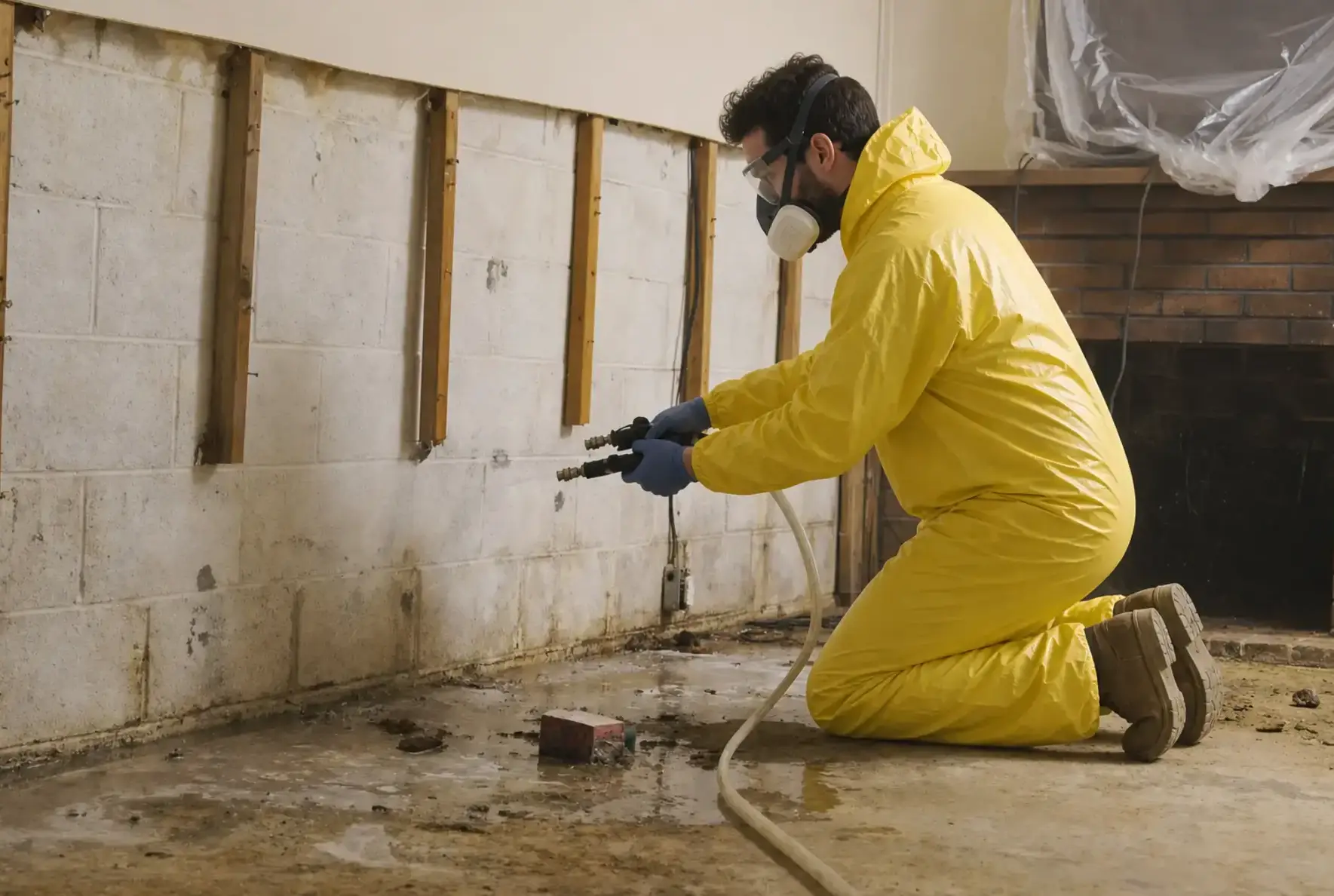
What gets cleaned in a basement, and what comes out
Two questions decide the scope of any mold job: what is it growing on, and how much of it is there. The EPA publishes an answer for both, and this is that guidance applied to the materials you would expect in a basement.
| Material | Under 10 sq ftabout a cabinet door, or one ceiling tile | 10 to 100 sq ftroughly one wall, or a small bathroom | Over 100 sq ftmore than one room's worth of surface |
|---|---|---|---|
| Concrete or cinder blockpoured or block foundation walls and the slabEPA, Table 2 | Wet vacuumHEPA vacuum | Wet vacuumHEPA vacuum | Wet vacuumHEPA vacuum |
| Wallboardfinished walls and any framed partitionsEPA, Table 2 | HEPA vacuum | HEPA vacuumRemove and discard | HEPA vacuumRemove and discard |
| Wood surfacesframing, stair stringers and stored timberEPA, Table 2 | Wet vacuumDamp wipeHEPA vacuum | Wet vacuumDamp wipeHEPA vacuum | Wet vacuumDamp wipeHEPA vacuumRemove and discard |
| Carpet and backingcarpet and pad in a finished basementEPA, Table 2 | Wet vacuumHEPA vacuum | Wet vacuumHEPA vacuumRemove and discard | Wet vacuumHEPA vacuumRemove and discard |
| Books and papersstored books, documents and cardboardEPA, Table 2 | HEPA vacuum | HEPA vacuum | HEPA vacuum |
What those methods mean, in EPA's words
- Wet vacuum
Wet vacuums are vacuum cleaners designed to collect water. They can be used to remove water from floors, carpets and hard surfaces where water has accumulated.
EPA, cleanup methods- Damp wipe
Mold can generally be removed from nonporous (hard) surfaces by wiping or scrubbing with water, or water and detergent.
EPA, cleanup methods- HEPA vacuum
HEPA (High-Efficiency Particulate Air) vacuums are recommended for final cleanup of remediation areas after materials have been thoroughly dried and contaminated materials removed.
EPA, cleanup methods- Remove and discard
Building materials and furnishings that are contaminated with mold growth and are not salvageable should be double-bagged using 6-mil polyethylene sheeting.
EPA, cleanup methods
These guidelines are for damage caused by clean water. If you know or suspect that the water source is contaminated with sewage, or chemical or biological pollutants, then Personal Protective Equipment and containment are required by OSHA.
EPA, Table 1Porous materials that are wet and have mold growing on them may have to be discarded.
EPA, cleanup methodsMold can grow on wood, drywall, carpet and furniture if they remain wet for more than 24 hours.
EPA, flood cleanup
Below-grade walls can pass moisture continuously without ever showing a leak, which is why basement mold often returns after a surface-only cleaning. Concrete and block are the forgiving part — EPA never lists them for removal at any size. The expensive part is whatever was finished or stored against them.
This is not rare locally: Riverside County has recorded flood events in 29 separate years, most often in the 2010s, and most recently in 2025. Water that sat years ago leaves growth behind whether anyone found it or not.Source: NOAA Storm Events Database, Riverside County (1996-2026; Flood, Flash Flood and Coastal Flood events)
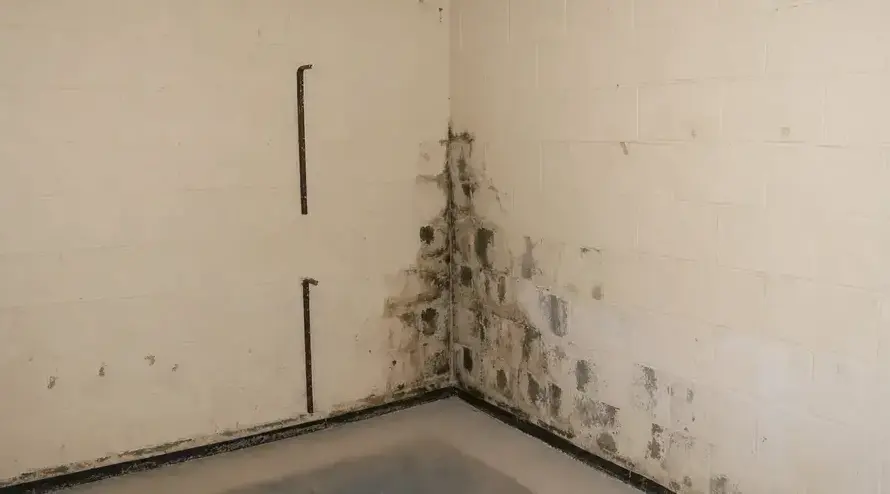
Basement Mold Removal Services for Corona Homeowners
Many Corona property owners face basement moisture challenges that create ideal conditions for mold growth. The city's older homes—particularly those in South Corona and other established neighborhoods—often have basements where moisture from plumbing leaks, ground seepage during winter rains, or ongoing irrigation runoff can accumulate. When moisture persists in these below-grade spaces, mold can develop quickly and spread throughout the foundation area, affecting indoor air quality and the structural integrity of the home. Identifying and addressing basement mold promptly is essential to protecting your property and the health of everyone inside.
Aaron Mold Remediation connects Corona property owners with independent local providers who specialize in basement mold removal. These providers assess the full extent of mold growth, identify the moisture sources driving it, and carry out thorough removal and containment to stop the problem at its source. After removal is complete, they focus on drying the space and addressing the conditions that allowed mold to take hold in the first place. This comprehensive approach—from inspection through remediation and moisture control—helps ensure your basement remains dry, healthy, and protected against future mold problems.
Why Corona Property Owners Choose Aaron Mold Remediation
Local Basement Mold Removal Experts
Aaron connects Corona property owners with independent local providers experienced in basement mold removal. Fast response times and knowledge of area moisture patterns help identify and address growth quickly.
Thorough Basement Mold Removal Process
Basement mold removal requires containment, safe removal, and moisture control. The providers Aaron connects you with follow a complete removal approach, addressing both visible growth and underlying moisture sources.
Clear Communication Throughout Removal
Basement mold removal can feel overwhelming. Aaron's referral process connects you directly with local providers who explain findings, removal steps, and next actions in plain language throughout the process.
Moisture Control for Older Homes
Many older Corona homes, particularly in South Corona and the historic core, have crawl spaces where moisture from plumbing leaks, irrigation, or winter rains accumulates. Basement mold removal paired with moisture management helps prevent recurrence.
How Our Basement Mold Removal Process Works
Schedule Your Basement Mold Removal Visit
Contact Aaron Mold Remediation to describe basement mold concerns in your Corona home. We'll connect you with a local independent provider who will schedule a convenient time to inspect your basement and identify the source and extent of mold growth.
Get Your Basement Assessed and Diagnosed
The inspection provider evaluates your basement for active mold, moisture sources—such as plumbing leaks or water seepage from seasonal rainfall—and structural conditions that may be trapping moisture. You'll receive a detailed assessment and a plan tailored to your basement mold removal needs.
Begin Safe Basement Mold Removal and Drying
The independent provider removes affected materials and contaminated areas using containment and safe removal practices, then applies remediation techniques to prevent regrowth. Follow-up monitoring ensures your basement remains dry and mold-free as part of the removal process.
Dealing with Basement Mold Removal in Corona? Get fast, professional help.
Call Now — (951) 332-7066Basement Mold Removal Across Corona
Corona's inland location means outdoor humidity stays relatively mild through much of the year, yet basements in older homes—especially in South Corona and the city's historic core—face a different challenge. Aging construction, combined with moisture sources like irrigation runoff, plumbing issues, and winter rainfall, can create conditions where basements trap dampness and encourage mold growth. The gap between above-ground dryness and below-grade moisture accumulation makes basement mold removal a distinct concern for property owners with older foundations seeking to protect indoor air quality and structural integrity.
Newer neighborhoods with modern construction may incorporate better moisture barriers, but even well-maintained basements can develop mold when water intrusion, condensation, or insufficient ventilation goes unaddressed. Early detection and professional removal are key to preventing spore spread through the home and protecting household health. Aaron Mold Remediation connects Corona property owners with independent local providers who assess basement moisture sources, contain affected areas safely, and remove mold to restore a healthier indoor environment.
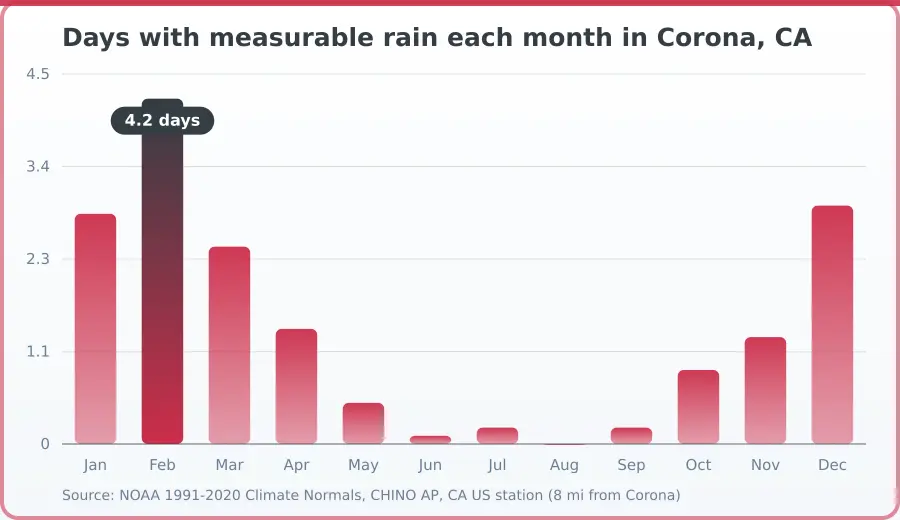
| Period | Days with measurable rain by month (days) |
|---|---|
| Jan | 2.8 |
| Feb | 4.2 |
| Mar | 2.4 |
| Apr | 1.4 |
| May | 0.5 |
| Jun | 0.1 |
| Jul | 0.2 |
| Aug | 0 |
| Sep | 0.2 |
| Oct | 0.9 |
| Nov | 1.3 |
| Dec | 2.9 |
Source: NOAA 1991-2020 Climate Normals, CHINO AP, CA US station (8 mi from Corona). Retrieved October 5, 2026.
Seasonal Basement Mold Removal Needs in Corona
Spring: Moisture Accumulation
Winter rains drain through soil toward basements, and spring's warming temperatures increase moisture activity in below-grade spaces. Aaron Mold Remediation connects property owners with local providers who assess moisture intrusion and address mold growth before summer heat intensifies conditions underground.
Summer: Heat and Ventilation
Summer's dry outdoor air contrasts sharply with trapped basement humidity, creating condensation on cooler walls and surfaces where mold thrives. Local providers accessed through Aaron Mold Remediation evaluate ventilation, identify moisture sources, and develop removal strategies tailored to summer-season basement conditions.
Fall: Irrigation and Plumbing Leaks
Older homes in South Corona and the city's historic core often have crawl spaces and basements where moisture from landscape irrigation, slow plumbing leaks, and autumn rains accumulates over time, creating ideal environments for mold colonization. Aaron Mold Remediation connects you with providers who identify these moisture pathways and plan thorough basement mold removal.
Winter: Cold and Condensation
Winter temperature swings cause basement walls to sweat with condensation, while roof leaks and saturated soil increase hydrostatic pressure on foundation walls. Aaron Mold Remediation helps property owners find local providers experienced in winter basement mold assessment and removal in residential and older properties.
Related Services
Basement Mold Removal FAQs — Corona, CA
Basement mold removal starts with inspection to identify affected areas and moisture sources. The local provider will contain the mold zone, remove contaminated materials, clean and treat surfaces, and address the underlying cause—whether that's a plumbing leak, seepage, or humidity buildup. They'll restore safe air quality and help prevent recurrence by improving drainage or ventilation in your basement.
Aaron Mold Remediation links you directly to independent local providers in Corona who handle basement mold removal. Response time depends on the provider's schedule, but connecting you with a nearby professional happens quickly so you can assess the problem and start remediation without unnecessary delay.
Pricing for basement mold removal depends on the affected area size, material type (drywall, concrete, framing), contamination severity, moisture source complexity, and whether structural repairs are needed. The local provider you're connected with will assess your basement and provide a cost estimate based on your specific situation.
Before work begins, remove or protect personal items stored in the basement. The provider will discuss containment setup and whether you should vacate during removal. Keep pets and family away from the work zone, and prepare to address the moisture source—be ready to discuss any known leaks, drainage issues, or humidity problems with the professional.
After removal, control moisture by fixing plumbing leaks promptly, ensuring gutters and downspouts direct water away from your foundation, and improving basement ventilation or drainage. Monitor humidity levels and address any dampness quickly. The provider can advise on long-term moisture management strategies tailored to your basement's layout and condition.
While Corona's outdoor humidity is relatively low much of the year, basements in older homes can trap moisture from winter rains, irrigation runoff, or plumbing failures regardless of season. Indoor basements create their own moisture environment, so mold risk persists year-round—especially in homes in South Corona and historic neighborhoods where moisture intrusion is more common.
Homeowner Safety Toolkit
Verify Your Corona, CA Mold Remediation Company
Before you hire anyone, use these independent national resources to confirm credentials, standards, and track record.
ACAC
An independently accredited certifying body for mold inspectors and consultants — one of the few in this field whose standards are verified by an outside accreditation board, not just self-declared.
Find a Certified InspectorBBB
Look up any mold remediation company's complaint history, customer reviews, and accreditation status — a free, independent check before you hire.
Check StandingCDC
Covers the health effects of mold exposure and safe cleanup practices, separate from the remediation work itself — useful if anyone in the home has respiratory symptoms.
Mold Health GuideDealing with Basement Mold Removal in Corona, CA? Call (951) 332-7066 for 24/7 help.
Call Now — (951) 332-7066Areas We Serve in Corona, California
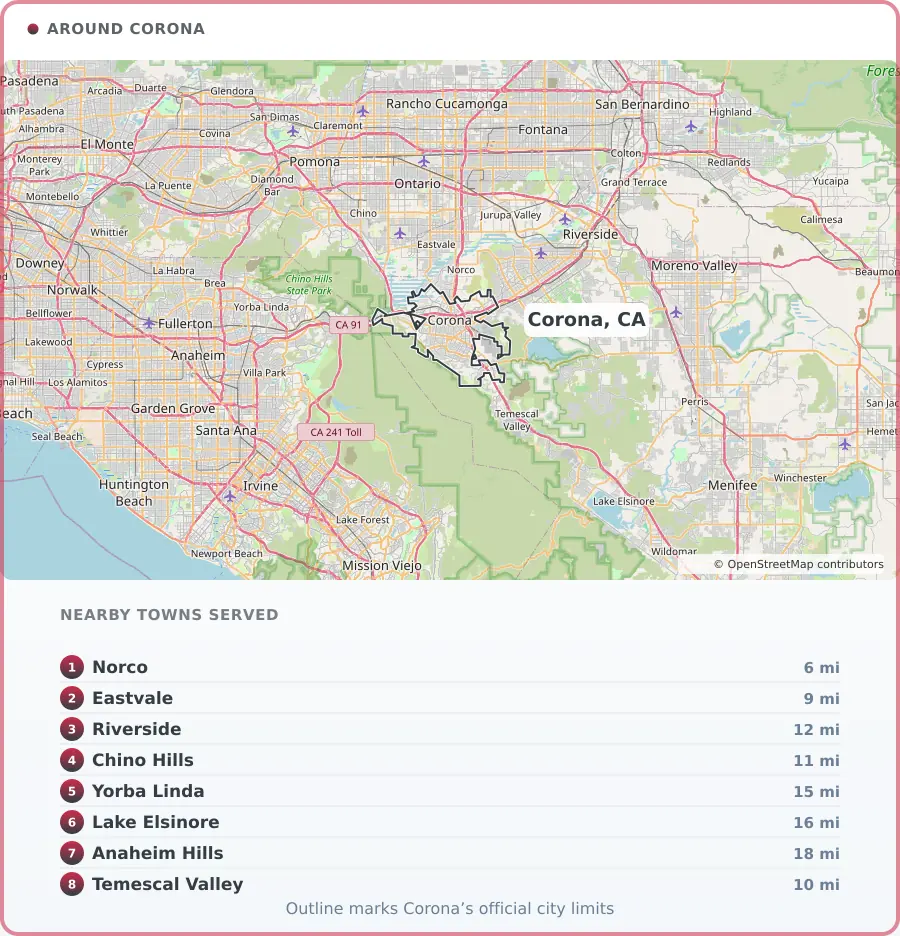
Corona, CA is the centre of the service area, which extends to 8 surrounding towns. The map shows how far that reaches.
Corona, CA Information
Tucked into Riverside County's Inland Empire, Corona, CA sits where freeway corridors meet, making it a natural crossroads for commerce heading across Southern California. The city's economy runs on logistics and distribution, with warehousing and goods movement anchored by names like Home Depot, Costco, and Target alongside manufacturing roots that include Fender Musical Instruments' headquarters. Healthcare, education, and steady residential construction round out a local economy that's as practical as it is diverse.
With around 158,000 residents, Corona has grown into a popular landing spot for commuters bound for Orange County and Los Angeles, while still holding onto a community feel. Neighborhoods like Dos Lagos and South Corona reflect that newer, family-oriented growth, even as retail centers and established employers like Corona Regional Medical Center and the Corona-Norco Unified School District keep daily life humming close to home.
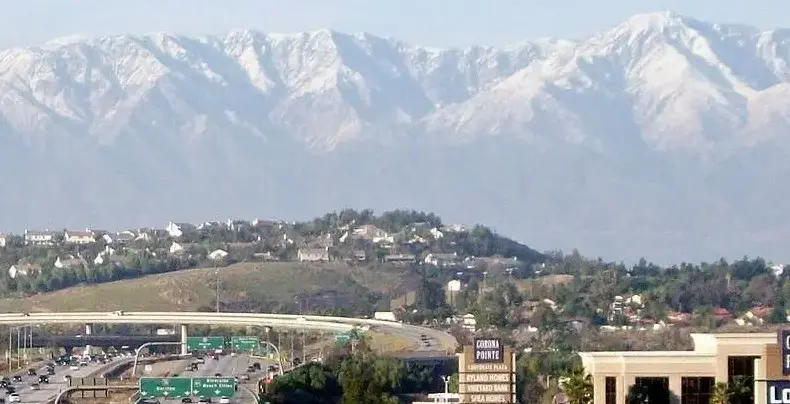
Photo: FredBren, Public domain